I call this a diary rather than a blog. It's the page where I add or link to new
stuff with content arranged in date order, rather than where I regularly write short
pieces on what I'm doing… although some of this does read rather like a blog.
(Dublin & Manchester)2
A ridiculous schedule this week! I'm in Dublin on Monday 17th for the first part of the Crossover
project's International Conference on Policy Making 2.0.
This has been a very interesting project
in which I've played a very minor role but have learned a great deal. The use of open data for evidence-based policy
making is definitiely something to be encouraged.
On Tuesday I take a bit of a left turn as I head for Manchester for
Making Data Work: Cities & Transport.
On this occasion my attendance is being funded not by W3C but by Reeep, the
Renewable Energy and Energy Efficiency Partnership,
a very interesting organisation based in Austria that is doing seriously good work with linked open data for
energy efficiency and climate change mitigation.
Machester again on Wednesday afternoon for an open meeting of the UK Gov Linked Data WG
and then it's back to Dublin for the day again on Friday 21st for the
SEMIC conference.
Open Data Dag in Vlaanderen
At last year's Using Open Data workshop (PMOD), Noel van Herreweghe was buzzing with the
excitment from the successful first Flanders Open Data Day he'd organised the previous week. He
kindly invited me to give a keynote speech at the next year's event … which is now upon us.
Tia Sharpe and April Jones are more important than Edward Snowden
The Web privacy and freedom communities are screaming about the revelation that the US intelligence services
routinely record details of phone calls, e-mails and other electronic communications. They are, however, silent
on the use of the Web to distribute and thereby encourage the production of child abuse material.
Earlier this week I gave a talk at Sem Tech Biz
in San Francisco that reported on the Open Data on the Web workshop
I ran back in April and how that fits in to the likely future work around the topic of (open) data
at W3C. Slides on their own only tell you so much so I've created a slidecast version.
As is so often the case, I'm working on an EU project proposal at the moment and I want to be able to
show the countries covered by the project. To do that I needed a map that I could just click the
relevant countries and they'd be filled in, then I could copy and paste that into the proposal.
My guess is such tools already exist on the Web but I wanted to make my own.
It needs writing up but it's all working now so I may as well publish it and add the
commentary later.
Machine Readable Rights and the News Industry: Opportunities, Standards and Challenges
Hmm … rights expression languages, how to attach metadata to lots of online resources at once,
machine readable metadata … those themes have a familiar ring to them. The IPTC - the membership
organisation for news agencies that does a lot of technical standards work including rNews - has invited
me* to speak at their event in Amsterdam, something I'm looking forward to. For good reason, licences on the Web are
almost synonymous with Creative Commons but how can licences be included in a modern, high capacity workflow?
I need to talk to various colleagues and get a full picture of the space but I can't help but think that
POWDER just might have a role to play here.
* Actually the invitation first went to Ivan Herman but he passed it to me.
EUROGI imaGIne Conference
My role at W3C means I spend a lot of time thinking and talking about open data (and I
wish I had more time to actually do something practical about it/with it to). The role
played by geospatial data is critical in this. Obviously there are the base maps, but so many
data sets refer to specific locations, regions, postcodes etc. Applications that use open
data very often depend on geospatial data. Things like the UK Crime Map
are the post-children of the open data movement.
So I'm pleased to have been invited to contribute to the imaGIne conference - an event that
provides the first of several trips to Dublin this half year as Ireland is the current holder of the
EU Presidency. I'll be reviewing how GI data is currently used on the Web and what we need to do to make
it easier.
I've just finished a very throught provoking book: C J Sansom's Dominion. By coincidence, this week
saw the UK Independence Party gain its highest poll rating in a Westmister byelection. Scarily the two go together.
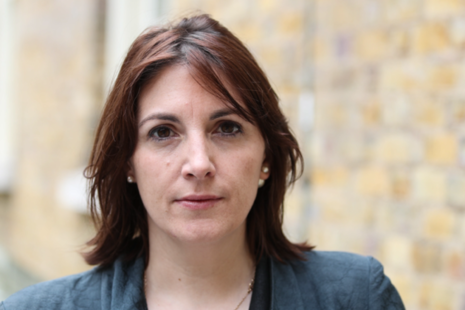
I've used the same picture as my online image/avatar since it was taken, I think in 2003. Hmm … maybe
it's time to update it. This new one was taken on Saturday
at a reunion for staff of Radio Orwell. Photo credit is due to Wendy Bailey.
I suppose I ought to update relevant pages now in different corners of the Web. Gah! But hey … I kept the
same URI and the images are identical in size so where the old was was referred to rather than copied, it's
just been updated automatically.
And be honest — you don't look the same as you did 10 years ago either.
Science Fiction First Editions
It's hardly surprising that someone who makes a living as a techie enjoys reading science fiction novels —
but I've got a thing about not just the novels but their first editions … and having complete sets of them.
At the end of last year I worked with the team at PwC to study how different public authorities were
tackling the creation and publication of URI sets designed to be persistent over the long term. This is a crucial
part of the open data infrastructure and different countries have gone about it in slightly different ways
although there is a lot of commonality - which is reassuring. The original document is published as a PDF
on the EC's Joinup Platform. I wanted a Web version …